An unapplied purchase payment is money you paid to a supplier before you know which bills it covers.
You record the payment first, then apply it to bills later.
This is the opposite of the usual flow, where you create the bill first and then record a payment against it.
Note: For customer payments, see Unapplied Payments (Sales).
Payment with no reference: you paid a supplier, but the payment doesn’t say which bills it covers
Payment before the bill: you pay before you’ve received the bill
One payment for several bills: a single payment covers multiple bills, but you don’t know the split yet
Unapplied purchase payments follow the batch payment flow. All payments applied from it are combined into a single cashflow record.
The difference is the order of steps:
Batch payment: select the bills first, then record one payment for them
Unapplied payment: record the payment first, then apply it to bills as they come in
Note: For the difference between bulk and batch payments, see Bulk and Batch Bill Payments.
Open payments: go to Purchases → Payments → Payments Due
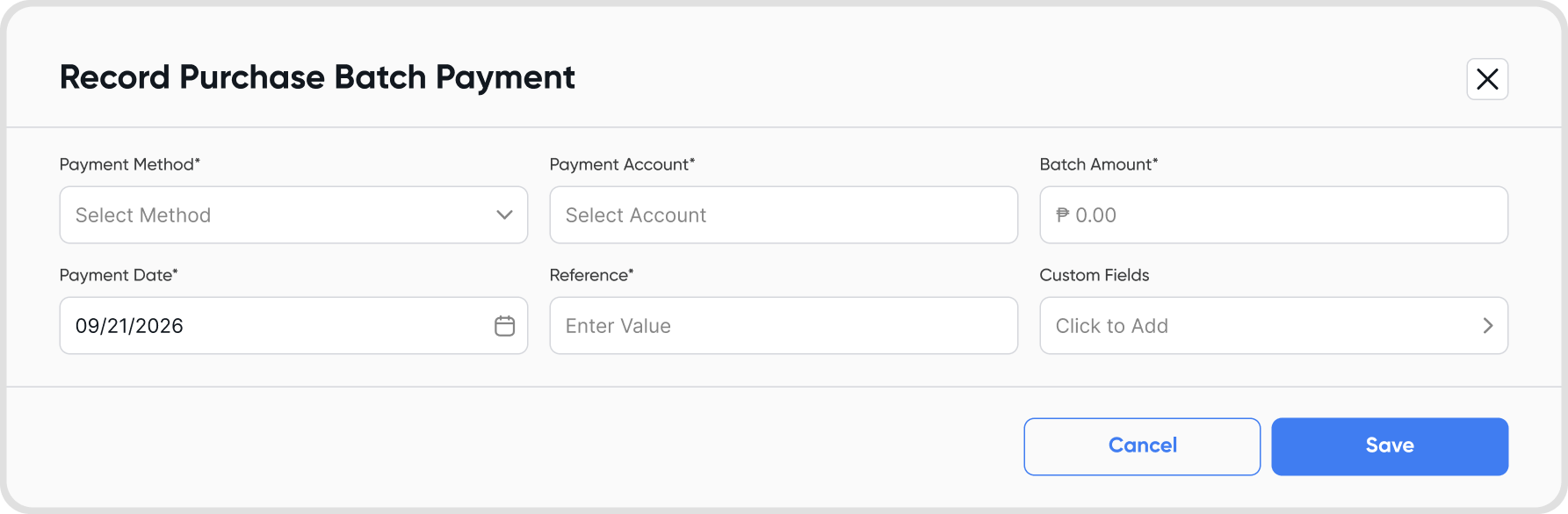
Start a new unapplied payment: click the arrow beside + New Payment, then select Unapplied Payment
Fill in the required fields:
Payment Method
Payment Account
Batch Amount
Payment Date
Reference
Add custom fields (optional): click Custom Fields to add more details
Save the payment: click Save
Note: Only cash and bank accounts can be selected as the payment account.
The payment is recorded in your ledger as soon as you save it, before it’s applied to any bill.
It debits Accounts Payable and credits the payment account.
The payment appears in your cashflow as one record for the full batch amount.
Applying the payment later doesn’t change the amount recorded. It only moves part of the amount from the unapplied payment to the bill it pays.
You can apply an unapplied payment from either of these pages:
Bills: go to Purchases → Bills
Payments Due: go to Purchases → Payments → Payments Due
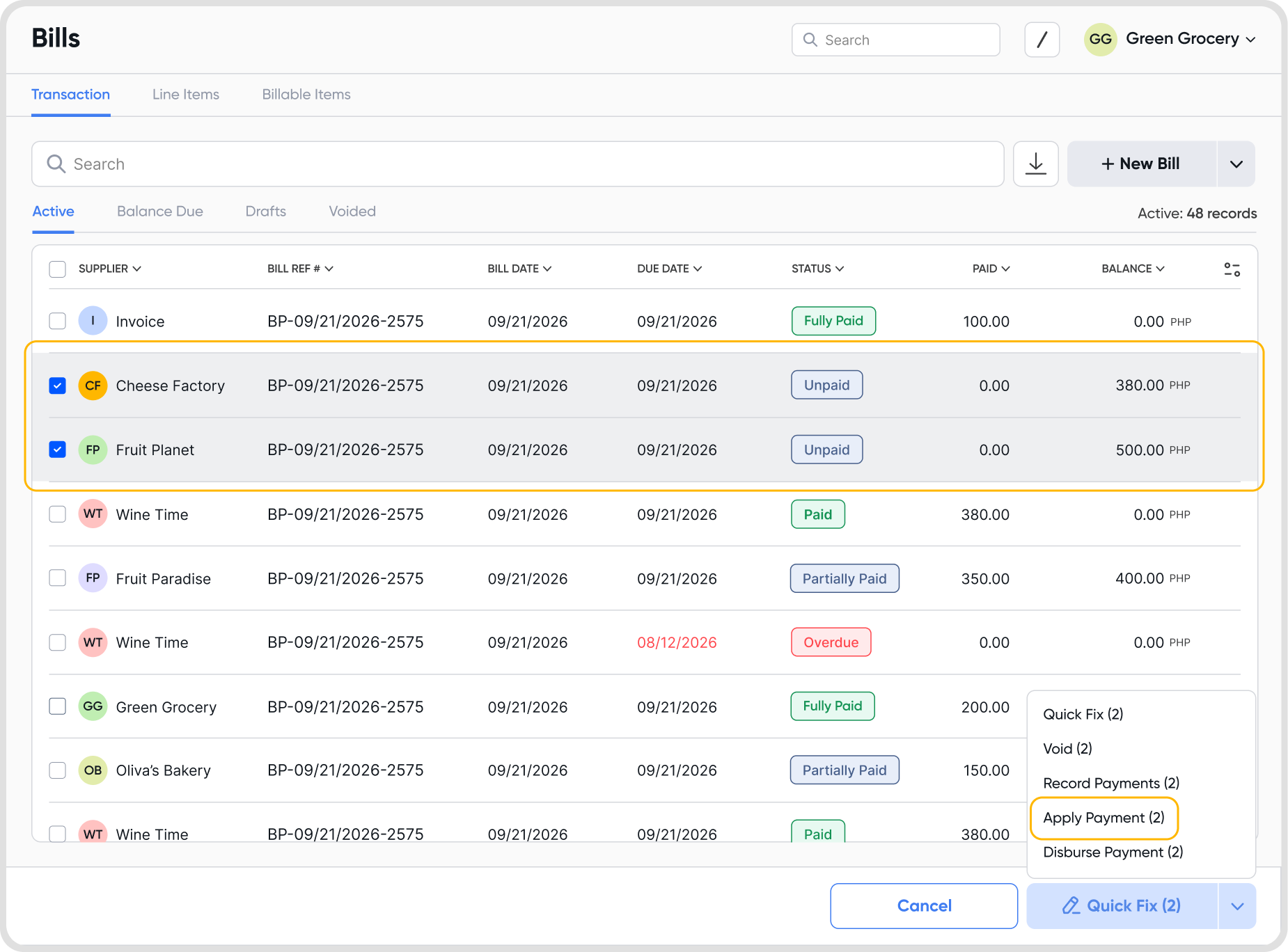
Select the bills: select the bills you want to pay
Open the actions menu: click the arrow beside the action button at the bottom of the page, then select Apply Payments
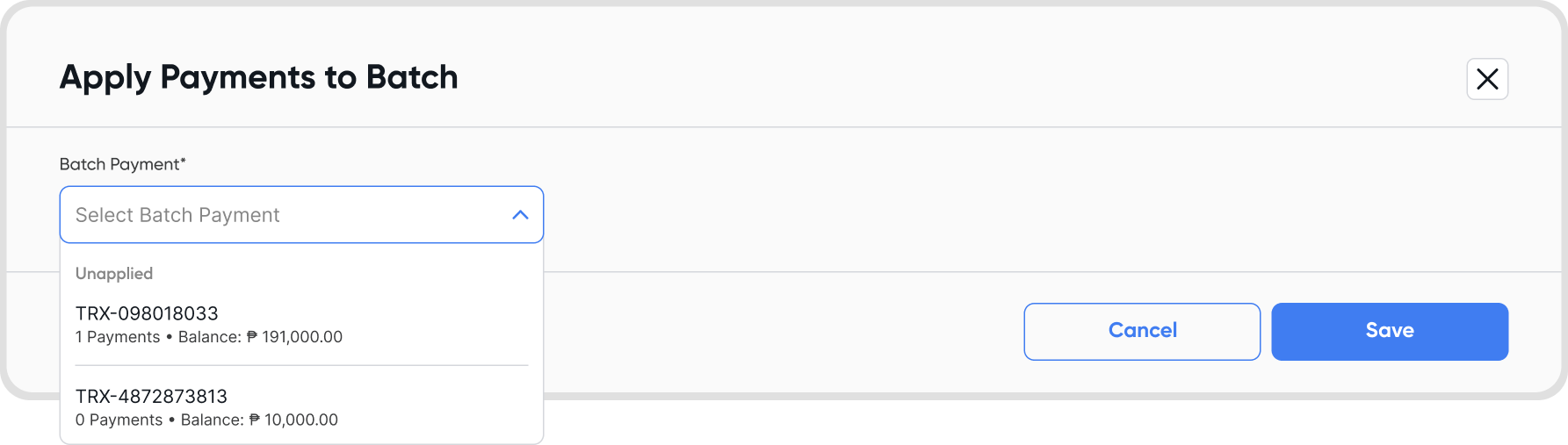
Choose the batch payment: select the unapplied payment from the Batch Payment dropdown. Each option shows its number of payments and remaining balance.
Review the amounts: the payment method, account, date, and reference come from the batch payment and can’t be changed
Apply the payment: click Save
Note: Only unapplied payments appear in the Batch Payment dropdown.
Yes. You can apply part of the payment now and apply the rest later.
To change how much goes to a bill:
Open the payment amount: click the amount under the Cash Paid column
Edit the amount: enter a new Bill Payment Amount. You can’t pay more than the bill’s balance due, which is shown as the maximum.
Save your changes: click Save
The payment stays under Unapplied until its full balance has been applied.
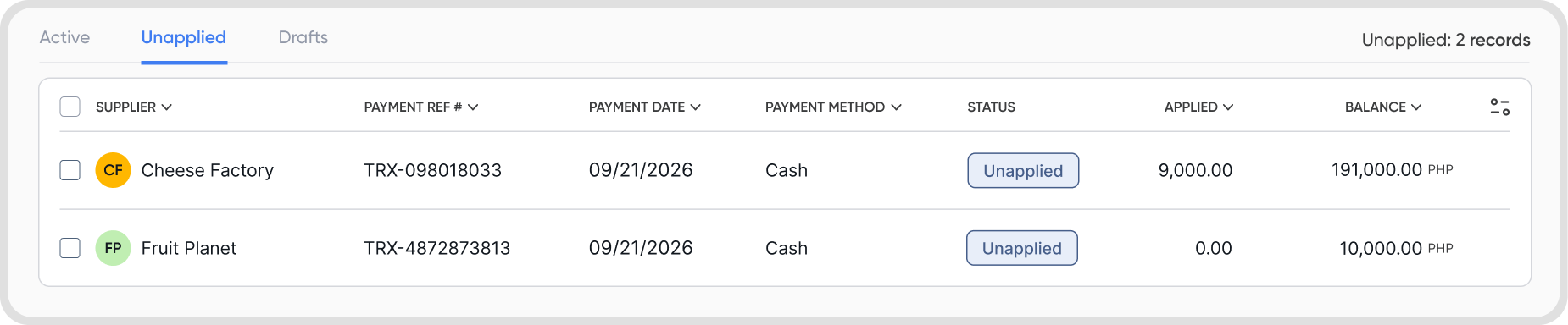
Go to Purchases → Payments → Batch Payments and open the Unapplied tab.
Each row shows how much has been applied and the remaining balance.
Open a payment to see:
Basic details: contact, date, payment method, and account
Payments: every bill the payment has been applied to
Totals: the batch amount, applied payments, and remaining balance
Note: Batch Payments also has Active and Drafts tabs. Active holds regular batch payments and fully applied unapplied payments.
It moves to the Active tab and becomes a regular batch payment.
This happens automatically and can’t be reversed.
Note: Once fully applied, the payment shows as a negative amount because it’s money leaving your account. This is expected.
Yes. If the amounts you apply are more than the remaining balance, the payment is fully applied and moves to the Active tab.
Its total then becomes the amount applied.
Yes. Removing an applied payment returns that amount to the unapplied balance.
The bill goes back to its previous balance due.
Deleting an unapplied payment also deletes every payment applied from it.
Each bill it paid goes back to its previous balance due, and the ledger entries are reversed.
If the payment was matched to a bank record, the bank record goes back to unreconciled.
Note: Check which bills the payment has been applied to before you delete it.
Locked periods: applying or deleting is blocked if the payment date falls within a locked period
Currency: the payment and the bill must be in the same currency
Transaction types: unapplied purchase payments can only be applied to bills, not supplier credit notes
Fees and tax: transaction fees, tax, and payment adjustments can’t be added to the unapplied payment itself