You can customize PDF templates for the following transactions:
Invoices
Invoice
Delivery Slip
Invoice Payment
Customer Credits
Customer Credit
Customer Refund
Orders
Sales Quote
Purchase Order
Delivery Slip
Customer Statements
Statement of Balances and Accounts
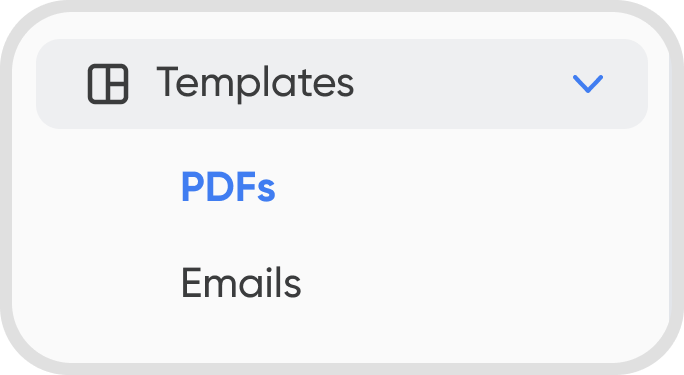
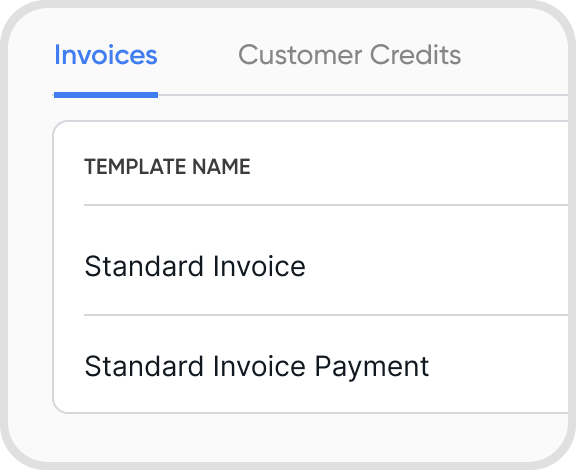
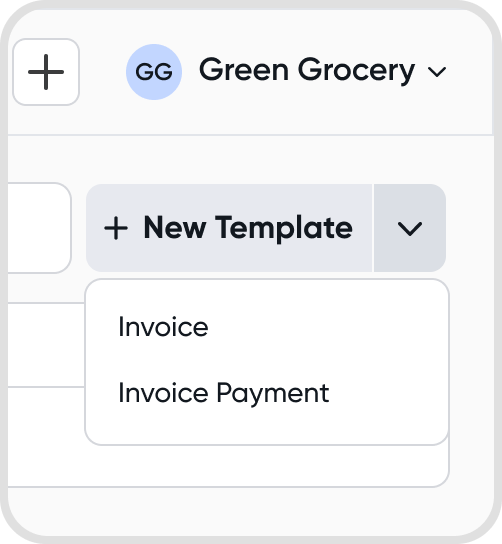
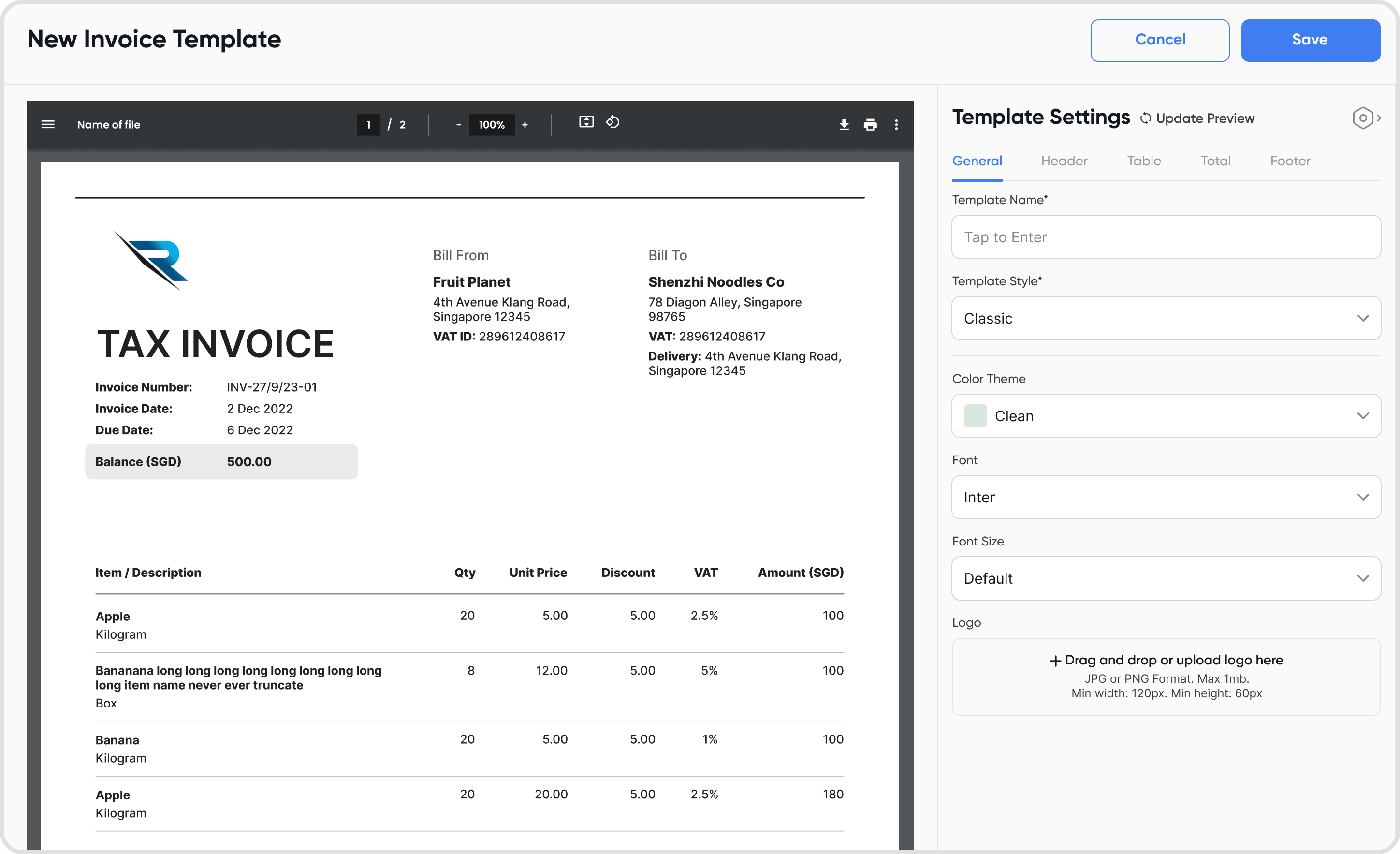
Go to Settings → Templates → PDFs, then select a tab (Invoices, Customer Credits, Orders or Statements) and click New Template.
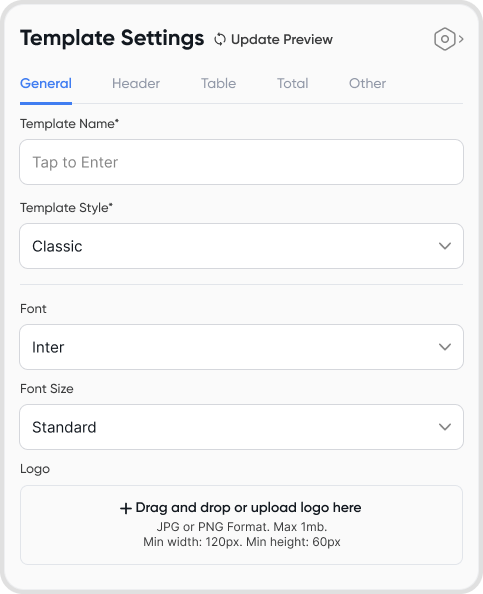
You can edit the following sections within a PDF:
General
Choose from 5 template styles (Classic, Bento, Formal, Overlay, Smooth), customize template name, colors, fonts, and add a unique logo per template.
Header
Customize title, document details, references, dates, terms, company info, contact details, GST/VAT ID, delivery, and address format.
Table
Enable/disable tax info, adjust row spacing (Standard, Compact, Relaxed), and customize column headers, widths, and visibility.
Total
Enable/disable the total section, adjust spacing, configure balance labels, and add a tax summary for detailed breakdowns.
Note: Applies to all templates except customer statement
Footer
Enable payment options for invoices and edit note titles for both invoices and customer credits.
Note: Applies to all templates except invoice payment and customer refund
Supporting Table
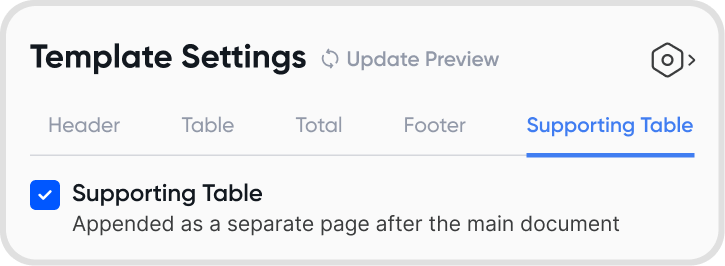
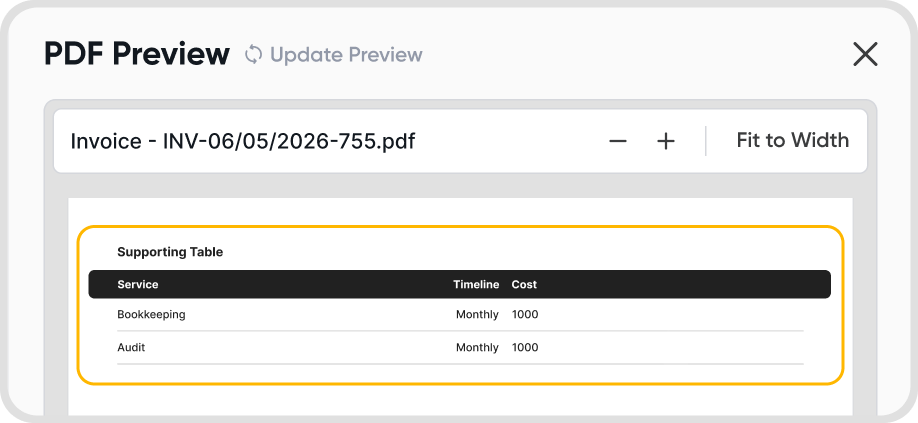
Enable a table that is appended as a separate page after the main document
Note: Applies to all PDFs that can be emailed in Juan: Invoices, Customer Credit Note, Sales Quote, and Purchase Order
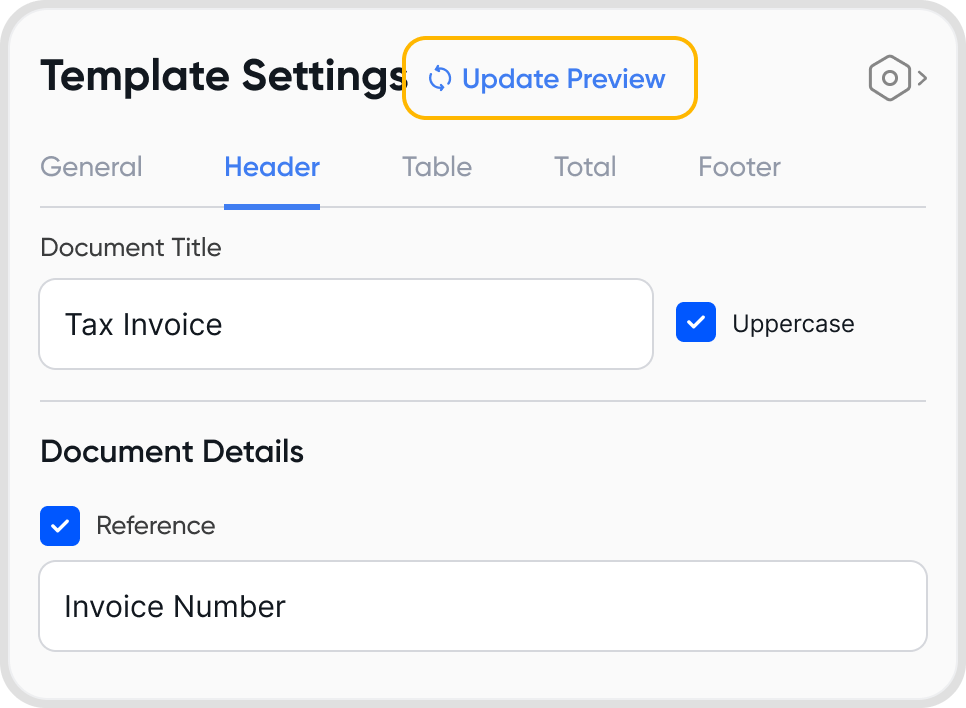
To apply the changes made in these sections, click Update Preview.
Open or create an Outgoing Template (Invoice, Customer Credit Note, Sales Quote, or Purchase Order) and enable Supporting Table.
Note: The supporting table always appears on a separate page after the main document. For example, if your PDF occupies two pages, supporting table will appear on the third page.
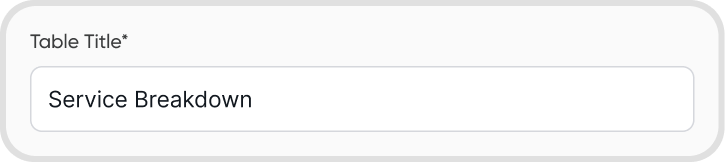
Enter a title for the table. This title will appear in the generated PDF.
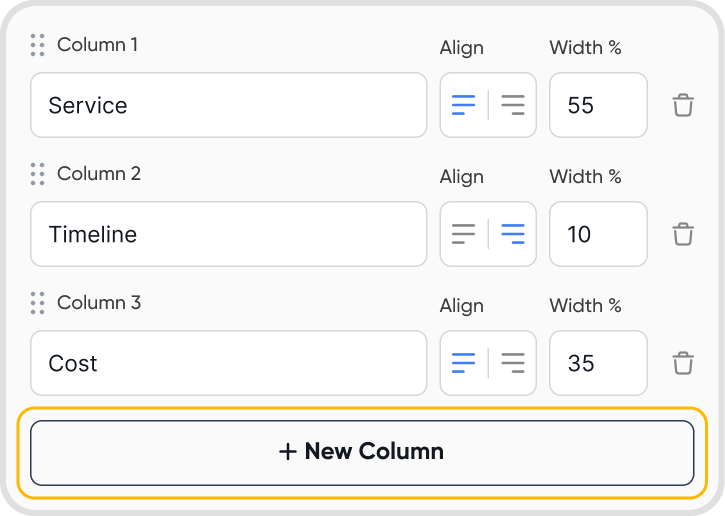
Add up to 10 columns. Set the alignment and width for each — widths always total 100% and auto-adjust.
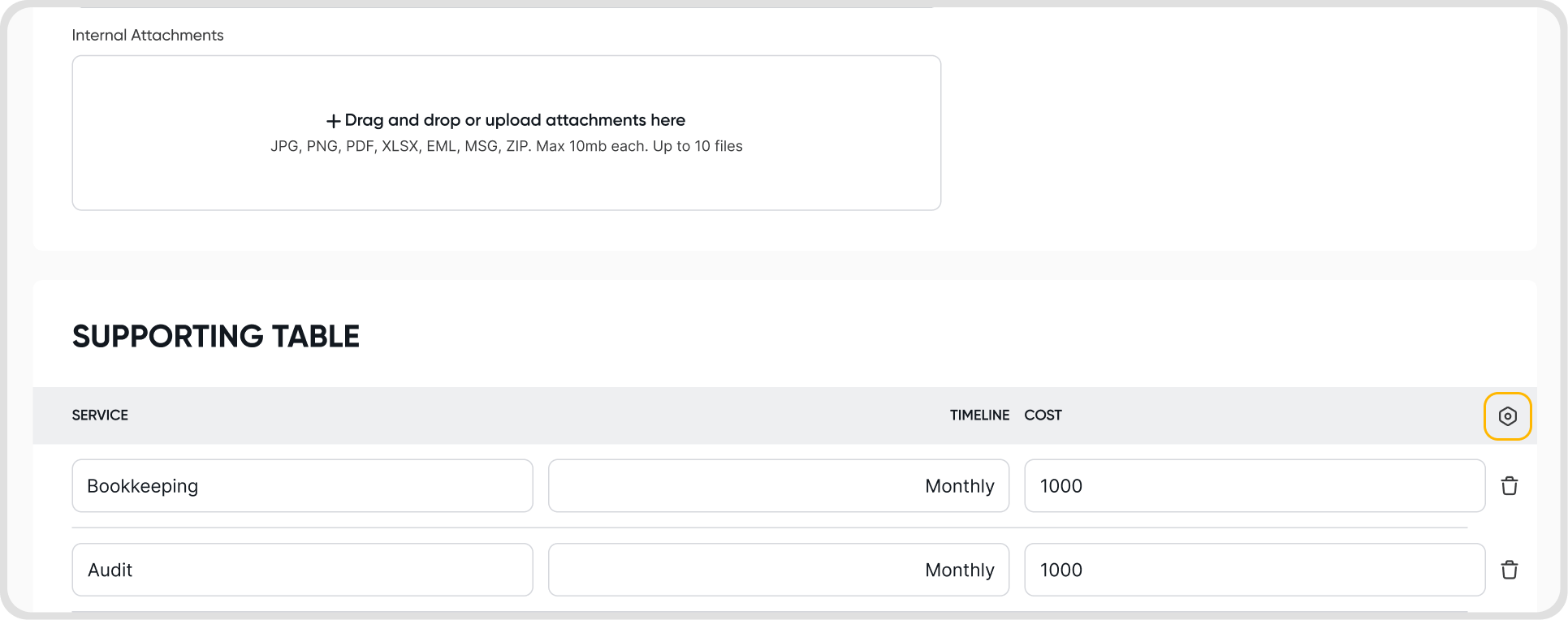
On the transaction where the template applies, click the Supporting Table icon. The table appears in edit mode at the bottom of the transaction.

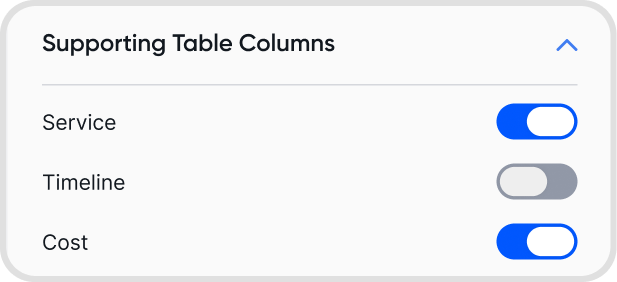
Fill in the column details. Use the settings icon inside the table to disable any columns you don't need.
Preview the PDF before saving to confirm the layout.
Yes, you can duplicate templates.
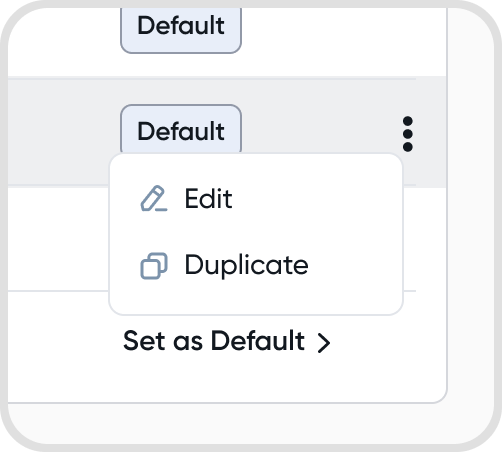
There are two types of default templates:
Template default for the organization: This is the default for all contacts unless a specific contact default is set.
Template default for a contact: Applied when a specific PDF template is set under Contacts. It overrides the organization default when the contact is selected during transaction creation or editing.
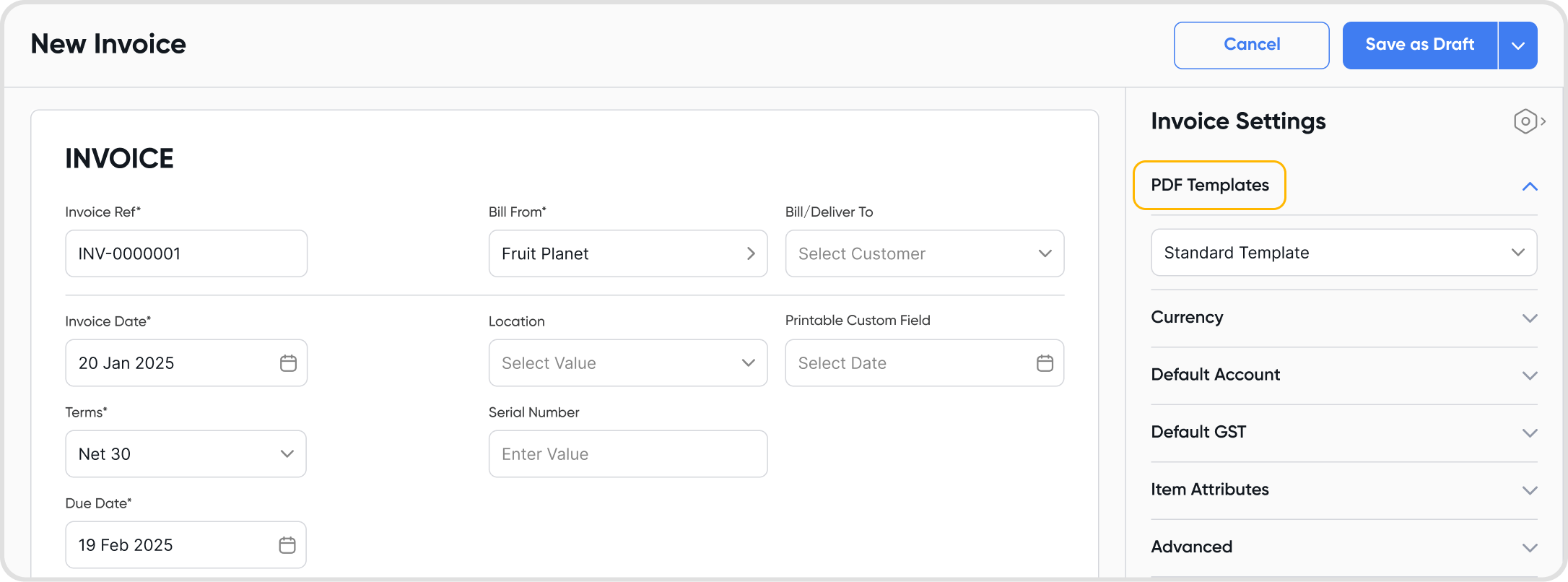
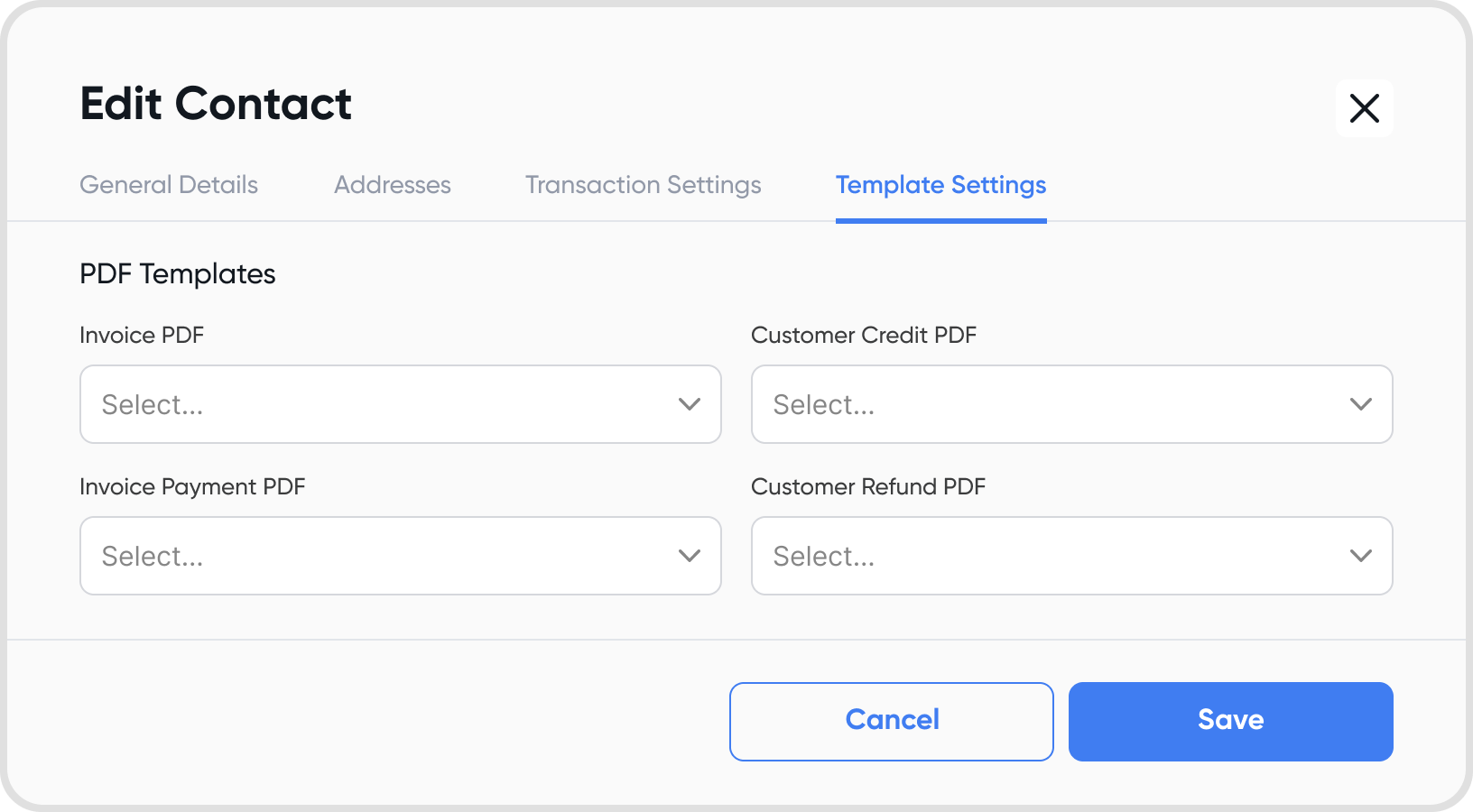
Yes, default templates can be assigned during contact import. The contact import template includes columns for selecting a PDF template per contact.
Updating a template applies changes to future transactions but previous PDFs remain unaffected.