Deposits are available under both the Sales and Purchases modules
It allows you to manage:
Customer Deposits (liabilities)
Supplier Deposits (assets)
This makes it easier to track advance payments, top-ups, and drawdowns.
By clearly separating deposit balances and integrating them into payments and invoice workflows, the module ensures accurate liability and asset reporting.
It reduces manual tracking, improves audit trails, and provides better control over prepayments and credit usage.
Here are some common scenarios where Deposits is useful:
Prepayments
Payments made before goods or services are received.
Examples
Tour deposits, prepaid medical procedures, software credit top-ups.
Security Deposits
Funds held to cover potential future obligations or damages.
Examples
Rental deposits, event space bookings, equipment rentals.
Retainers
Prepaid fees to retain services over time (common in professional services).
Examples
Legal retainer, freelance project retainers
Deferred Revenue
Money received for services not yet rendered.
Examples
Annual subscription paid upfront, booking fees, class packages.
Top-Ups / Recharges
Adding funds to a balance account (like digital wallets or service credits).
Examples
Wallet credits, prepaid internet.
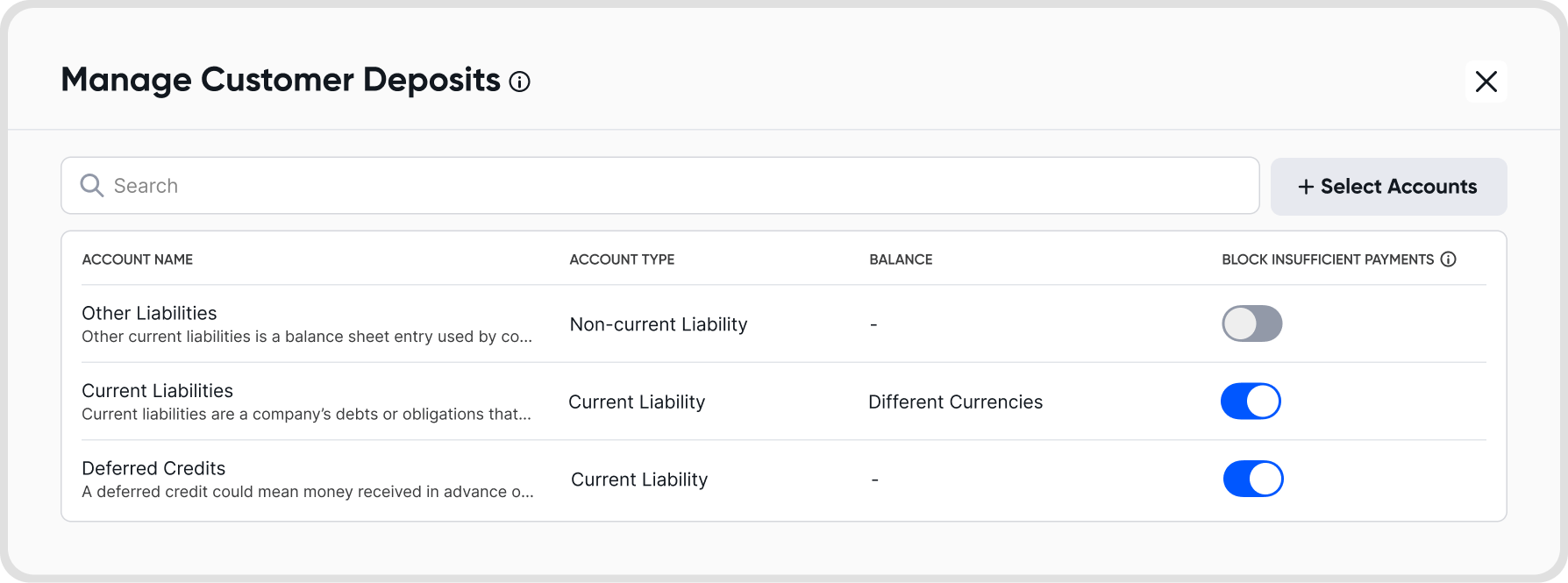
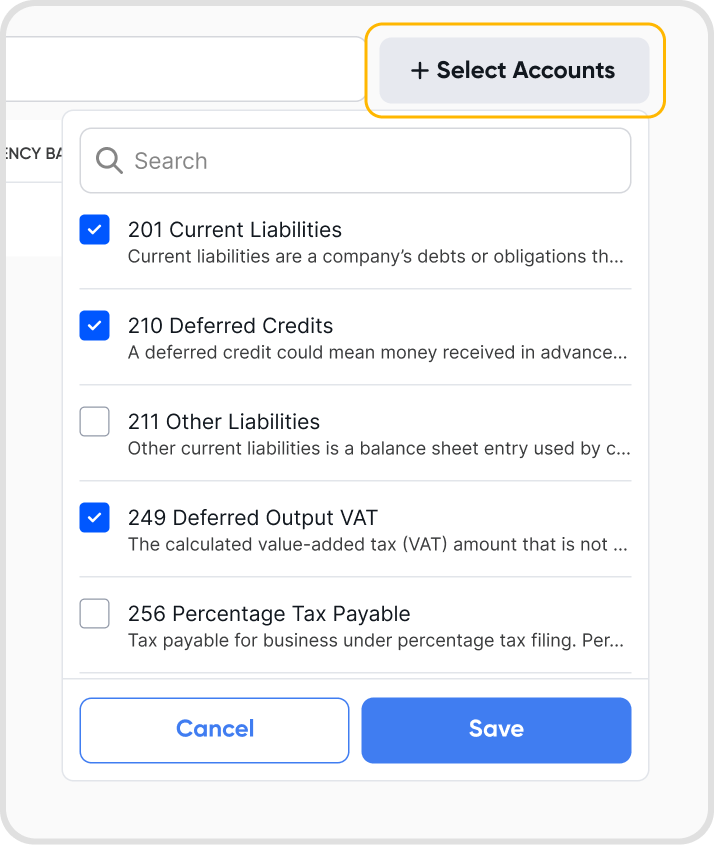
You can add and manage deposit accounts through the Manage Deposits settings.
This lets you define which account to use when tracking deposits for specific contacts. Simply go to Sales/Purchases > Manage Deposits to set up the appropriate accounts.
When turned on, it blocks invoice or bill payments that exceed the contact’s available deposit balance in that currency.
Other transactions, such as manual journals and cash entries, can still create negative balances.
The Balances tab shows a summary of all contacts with deposit activity. You can filter using these sub-tabs:
All: all contacts with deposit records
Balance Available: contacts with remaining balances
Fully Drawn: contacts whose deposits have been fully used or are overdrawn
Note: Deposit entries without a contact show under No Customer.
Create an invoice for the customer, or a bill for the supplier, and use the deposit account on the line item.
Once it’s active, the amount is added to that contact’s deposit balance.
You can also record a direct cash-in or cash-out using the deposit account.
The Transactions tab lists all deposit-related activity. You can filter using these sub-tabs:
All: all deposit transactions
Deposits: top-ups, such as cash-ins or invoice-linked and bill-linked deposits
Drawdowns: usage of deposits, such as invoice or bill payments made with Deposit / Wallet, or manual journals that debit the deposit account
Yes. The Deposits module supports multi-currency deposits, and all balances and transactions will reflect the relevant currency.
This is especially useful for businesses dealing with international customers or suppliers.
If you recorded an error in the deposit you can reverse it by voiding the related journals/transactions, or reverse it by creating journal entries reversing the error.
Record a cash-out from your bank account with the deposit account on the line, tagged to the customer. This creates a drawdown and reduces their deposit balance.
The deposit must be recorded under the same contact as the invoice or bill. Deposits under another contact, or without a contact, can’t be applied.
Open the invoice or bill and click Record Payment.
Set Payment Method to Deposit / Wallet, then select the deposit account as the Payment Account. The contact’s available deposit balance shows beside it.
Enter the amount and save. The invoice or bill balance goes down, and a drawdown is recorded against the deposit.
Note: A manual journal that debits the deposit account also creates a drawdown, but it won’t settle the invoice or bill. Always tag the contact on journal lines, or the drawdown shows under No Customer.