Create a new account under Settings > Configurations > Chart of Accounts
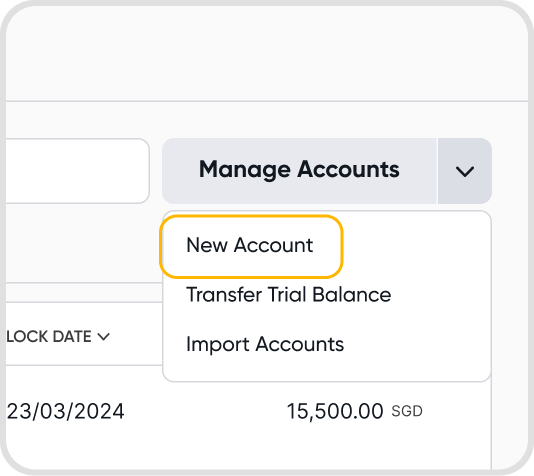
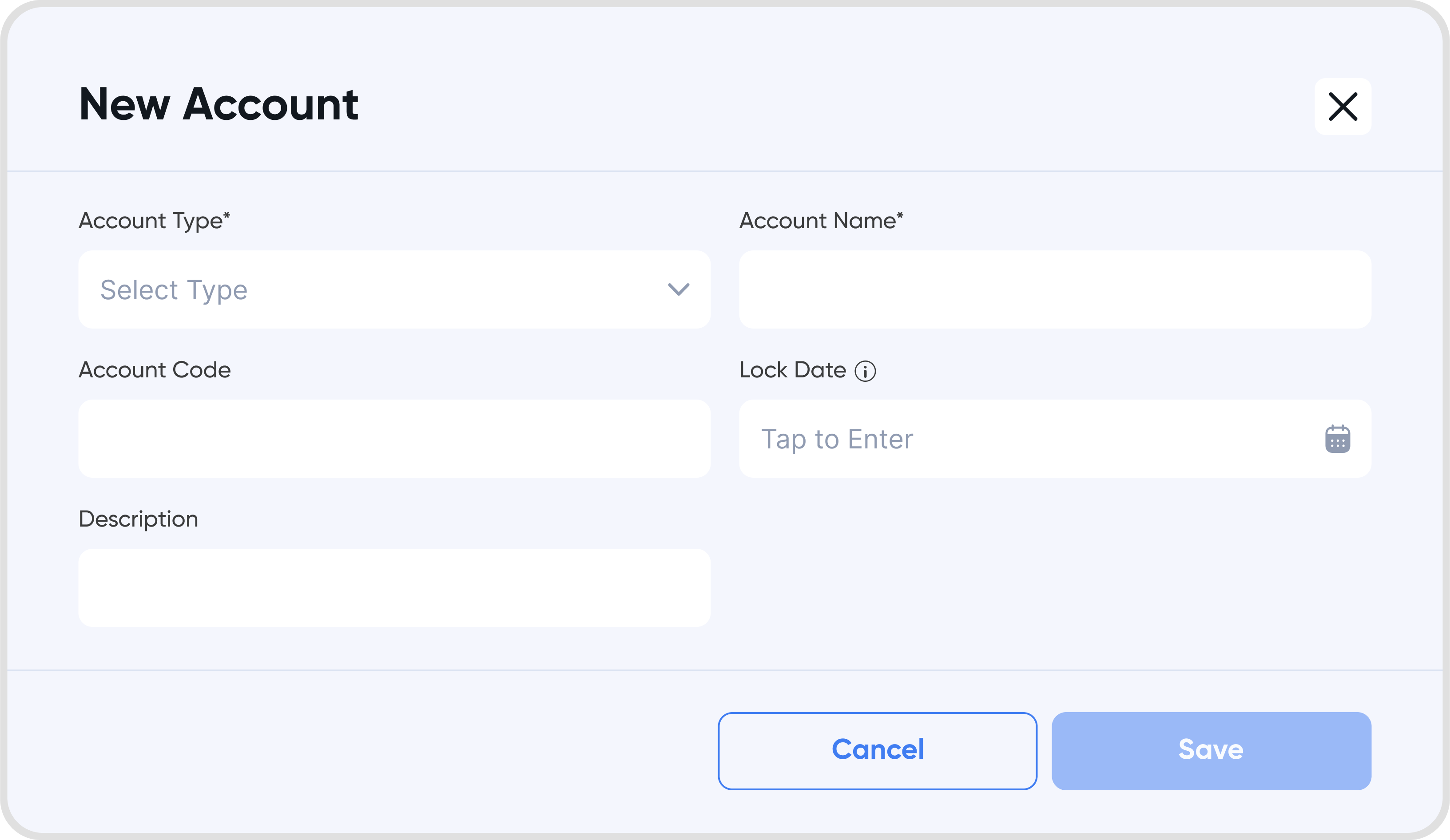
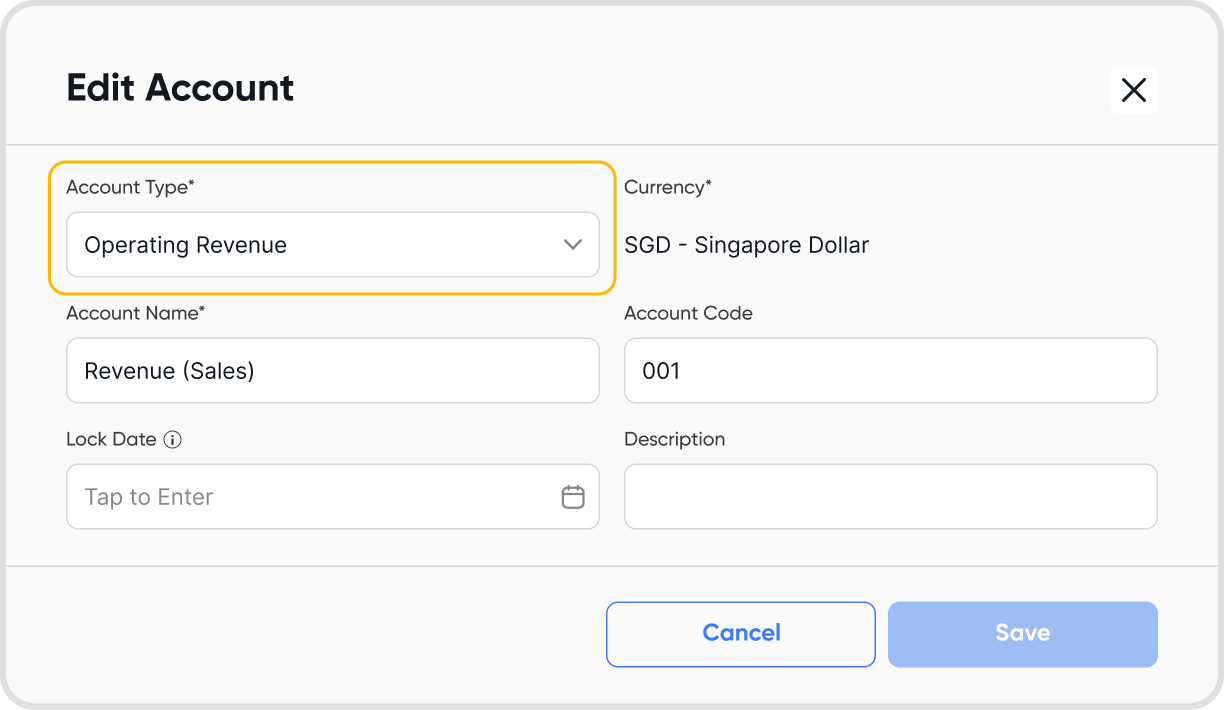
Click on an existing Account and Edit Account will appear
Change the Account Name as desired.
Yes, you can update the account type of an existing account only if -
It’s not a bank/cash account
It does not have a lock date
Change is allowed based on the account type direction. For example:
Change an Operating Expense to another Expense type.
Change a Current Asset to another Asset type.
However, certain changes across different account type directions, such as Asset to Income or Expense to Liability, is not possible.
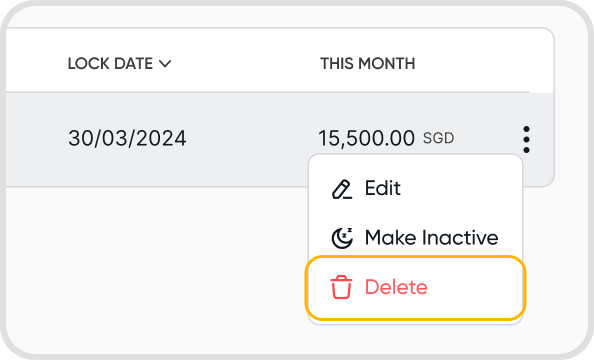
Accounts that do not have any active transactions, items or assets associated with it can be deleted.
Once all associated records are removed, open the 3-dot menu on the account and select Delete.
You can also bulk delete by selecting multiple accounts and choosing Delete.
Make sure that you do not have active transactions, items or assets associated with the account before trying to delete the account.
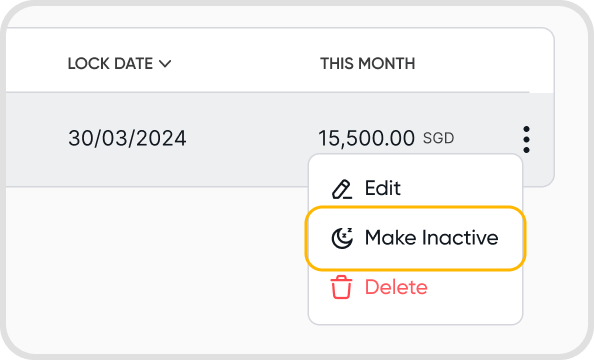
You can set the account as inactive via the 3-dots menu on the account record.
For bulk actions, tick the checkboxes beside the accounts and apply “Set as inactive.”
No, all accounts on Juan should have unique account names.
No, you cannot add new account types. The account types will be provided by Juan by default.
Under Assets:
Bank Accounts
Cash
Current Asset
Fixed Asset
Goodwill
Inventory
Investment
Non-current Asset
Under Equity:
Shareholders Equity
Under Expense:
Direct Costs
Discontinued Expense
Finance Cost
Income Tax Expense
Investing Expense
Operating Expense
Other Expense
Under Liability:
Current Liability
Non-current liability
Under Revenue:
Discontinued Income
Financing Income
Investing Income
Operating Revenue
Other Revenue
There will be no changes to the existing transactions.
For new invoices/bills/journals, the account will not be available as an option in the drop-down list when selecting an account on a line item.
A lock date prevents users in your organization from recording or modifying any transactions associated with the account, on or before the lock date.
This helps to make sure that any important transactions do not get edited or deleted, which is useful in audit scenarios, or when preparing financial reports.
To set the lock date for an account, click on Lock Date when creating an account to select a Lock Date.
Alternatively, you can also set a lock date for an account that has already been created by clicking on the account you would like to edit, and adjusting the lock date.
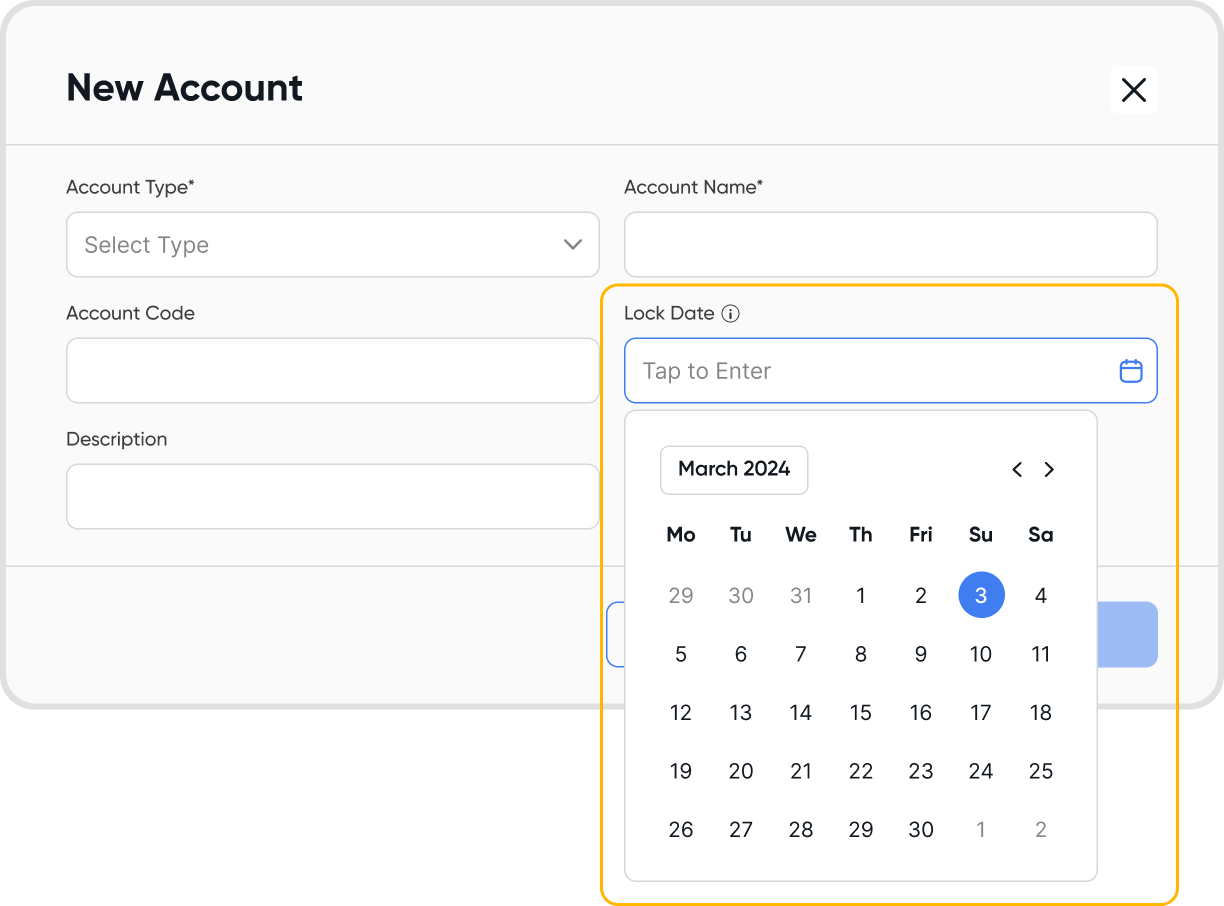
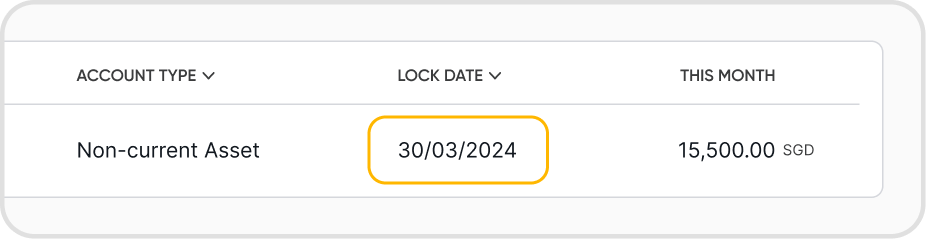
Select the accounts using the checkboxes, then choose “Set lock date” from the bulk actions.

Monthly movement refers to the net cash flow for the account in a month. In other words:
Monthly movement = Cash-in to the account - cash-out of the account.
Yes, you can. Removing an account's lock date, it will not impact any existing transactions.
You will now be able to modify/void/create transactions on or before the previously set lock date
A currency can only be set for accounts of type Asset - Cash and Asset - Bank Account.
You cannot change the currency of an account once it has been set up and saved.
If you have wrongly set up a currency, we suggest recreating the account with your desired currency.
Yes. All organizations will always have up to date COA defaults.
WTAX amounts in bills will be ledgered based on the WTAX code type:
Final → Ledgered to Final Withholding Tax Payable.
Others → Ledgered to Expanded Withholding Tax Payable.
No. The chart of accounts is a flat list, so you can’t nest accounts under a parent account, and balances don’t roll up automatically.
To keep related accounts together, use consistent codes or names, like 6100 Travel - Airfare and 6110 Travel - Hotel.
To show related accounts as one group in your financial statements, combine them in a report template under Settings → Templates → Reports → Financial. See Profit & Loss Template and Balance Sheet Template.
Note: Grouping accounts in a report template only changes how the report looks. It doesn’t create a combined account balance.
No. The account code is optional, so you can create an account with just a name.
Account codes help you organize your accounts, and you can show them as a column in your financial reports. See Profit & Loss Template.
Only admins with the Organization Details permission turned on can edit the chart of accounts.
Custom users can’t edit the chart of accounts.
To give an admin access, go to Settings → Access Management, select the admin, and turn on Organization Details under Organization Permissions. See Access Management.